French Translation of the Paris diaries in progress.


10 October 2016: the Editors of the Gouverneur Morris Papers, were invited to give a talk at a seminar at research institute LERMA of Aix-Marseille University in Aix-en-Provence, France.

Editor Dr. Melanie Miller and PhD student Emilie Mitran in front of LERMA.
As the attendants of this seminar were interested in the historical, cultural and linguistic aspects of the Era of Enlightenment, they were eager to learn more about our Morris editing project. A golden opportunity to spread the latest news on that.... in France! And, at the same time lay some bricks on the road of future cooperation for research on Morris.

Professor Gerard Hugues and PhD-candidate Emilie Mitran are currently working on a French translation of Morris's Paris diaries. The availability of the diaries in French would obviously open up this magnificent historical source to many people beyond the anglophone world.

Morris's observations and his involvement with the major figures of the time have been of great interest for scholars of the period. In his Paris diaries of 1789-1793, Morris gave a lively (and sometimes intimate) report of his life during the French Revolution. A very accurate transcription of those diaries was published in 1939 by editor Beatrice C. Davenport, and recently we were able to make some additions in the revised online edition published by ROTUNDA of the University of Virginia Press.

Page in diary June 5, 1789 with  many cross outs
Why the additions?
In the original diary there are illegible parts because of crossed out and blotted sentences, rendered in the text as three dots by Davenport. Usually these dots concern Morris's sexual escapades, but sometimes they are about medication and disease. Anything that was considered unsuited for the public eye.


The question is: who did it?
These cross-outs were perhaps partly done by Morris himself, obscuring some passionate moments with former lovers from his wife's eyes. But some other blot-outs could have been done by Morris's wife Ann Cary Randolph in the 1830s before handing the diary to Morris's first biographer Jared Sparks. Even his granddaughter Ann Cary Morris (another editor of his papers) in the 1880s is a possible "suspect."

During our work with the diaries, we discovered that some omissions were applied by Davenport herself in the 1930s. She used dots in place of a perfectly legible phrase; for example on 1 November 1789:  "Madame is ill ..." whereas it says in the original: "Madame is ill she has the Infirmity of her Sex in a great Degree" Each editor was uneasy about something that was taboo in their own time. Of course, the modern scholar would like to know which parts were crossed out or left out.

Hyperspectral image of diary cross outs.
At the seminar we could discuss the results of hyperspectral images taken of some crossed-out sections. This state of the art technique was performed at the Library of Congress, but unfortunately those images did not reveal much. The goal was to show the difference between the original ink at the time of writing and the ink used later for blotting.

It turned out both inks were iron gall ink with the same spectral response and it was impossible to distinguish between them in order to date them. Thus, we still don't know when the cross-outs were done. We could however reconstruct a few phrases and fill in part of the "dots" in Davenport's online edition. See American Founding Era Collection, http://rotunda.upress.virginia.edu/founders/FGEA.html.

The Story of Grace Coxe Le Ray de Chaumont


"MADAME, YOU WILL THANK ME LATER" 

With words to that effect Gouverneur Morris ended his last letter to Mrs. Le Ray de Chaumont on February 27, 1807. Although the exact words Morris used were “some Years hence you will thank me” --more in the style of the early 19th century-- it suggests something unpleasant had been decided, and even though she could not see that yet, it would all be for the best. 

Morris, this goes without saying, knew better. In fact, he was certain he knew best. He went on to inform her husband, James Le Ray de Chaumont (Morris’s business partner and friend, who was in Paris at that time) of the latest commotion involving his wife Grace (who resided in Philadelphia), telling him she would probably "call me a cross old Devil and feel much hurt.

What was going on? Why would Morris reprimand his friend’s wife? It is time for some further investigation.

James Le Ray de Chaumont (1760-1840)
From Morris’s Letterbooks, that contain copies of the thousands of letters he sent out during his lifetime, we can tell that (business-) correspondence with Le Ray took place on a regular basis. About one letter every fortnight went back and forth during the times the men were not at the same location. From the period 1799-1816 (when GM lived at Morrisania near New York City), we have 136 letters to James Le Ray. 

And, surprisingly, there are also eight letters to Grace Coxe Le Ray.  These date from the period December 1805 to February 1807. This is in itself exceptional, because Morris would not have a reason to write to her personally, except in special cases.

However, by the end of 1805, a special case had arisen. 


SOME BACKGROUND ON GRACE COXE.

The Coxes were one of the prominent families in Philadelphia. At the age of 27, in 1789, Grace married James Le Ray. The young Frenchman had come to America in 1785 to resolve some financial matters concerning his father, who had made large loans to the Continental Congress during the American War of Independence. The loans had been repaid in devalued paper money, causing an enormous loss for the family.

We learn a little more about their courtship (or rather, lack of courtship) from a letter Morris wrote to Le Ray in August 1807:
“... your conjugal Union arose from a Sense of Honor and Delicacy in you. That you accused yourself of having undesignedly, by Attentions which in your own Country pass for Nothing, and of Course make no Impression, interested her Feelings in such Way as (from her Account) to impair her Happiness thro Life. That you offered your Hand, provided your Parents would consent. That the same Sentiment of Honor had induced them to shut their Eyes also to Considerations of Fortune and splendid Connection.
 Apparently Morris seemed to think Le Ray had made a mistake in marrying her, but had done the honorable thing in doing so. Regardless, their wedding took place on July 14, 1789. Le Quartorze Juillet, but of course no one in Philadelphia had any idea yet of the important role this specific day was to play as the start of the French Revolution. News from overseas took several weeks to reach America.
Fall of the Bastille in 1789

Morris on the other hand, was in Paris at that time and witnessed how events spun out of control. By the time the young couple left for France in the spring of 1790, they would have known things were in turmoil overseas, but they went anyway and soon afterwards their oldest son Vincent was born.

Gouverneur Morris’s diary first mentions meeting Grace in Paris at her sister-in-law’s house in January 1791. It sounds as if he met her then for the first time; he described her as “looking like a fool,” but what he meant with his remark remains unexplained. Was she not particularly bright, or perhaps not as fashionable or well-spoken as the other ladies in the elegant circles Morris was by then accustomed to?

By the way, two years before, in May 1789, Morris described a meeting in Paris with “Madame Chaumont,” who talked to him “very serious, considering that she is said to be crazy.” The editor of the Paris-part of the diary, the erudite and otherwise very accurate Beatrice C. Davenport, misidentified her as Grace instead of Le Ray de Chaumont’s mother, who was by then estranged from her husband. She lived off and on with her married daughters in Paris.

Back to Grace’s story.
While Morris met Le Ray frequently during the next few years in Paris, he only mentions Grace four times, offering no additional information on her. When the situation in Paris became too dangerous after the fall of the Louis XVI, the Le Ray family took leave in September 1792, but Morris stayed behind (he was by now the American minister). After his successor had arrived by mid-1794, Morris left France to meet the Le Rays in Switzerland. It is evident that Grace was with her husband, for Morris stood as godfather to their newborn daughter Thérèse in a church in Lausanne in November.

No word on Grace for three and a half years, until 1798 when we learn that the family had traveled to Frankfurt, Germany, where Morris waited to meet them. Together they went north to Hamburg; from there they would take a boat back to the United States. Grace, James, toddler Thérèse and baby Alexander (born between 1795 and 1798), traveled together in their carriage(s), Morris in his own. There is no indication that 8-year old Vincent accompanied them; it could well have been that he was already enrolled in a school in Lausanne or Paris.
A three-masted schooner.


In the meantime it had become possible for James to return to France and he decided he would go to Paris for a while. He would try to convince potential French settlers of the advantages of living in the wilderness of upstate New York, while Morris would take care of the American side of the business.

Morris, who had already delayed his departure from Europe for more than a year, was eager to go home, but then young Alexander Le Ray became dangerously ill with smallpox, and the journey was again delayed. As soon as the boy had recovered by September 1798, they could search for a suitable ship that would take them and their considerable luggage, including Morris’s two horses, to New York.

At the time of departure on the ship Ocean, Grace had to be distracted in order not to upset her too much with the upcoming separation from her husband. Morris wrote: “The Ship gets under Way and we part with our friend Leray which is after all Preparation a painful Thing for his Wife. We deceive her therefore and he is off before she knows a Word of the Matter.” They finally left, rather late in the season, on October 4, 1798.

Arrival of a ship at Battery Park, New York c. 1800

Morris accompanied Grace and her two young children on a horrendous voyage across the Atlantic, but during the eleven-week ordeal he mentions their presence on the same ship only once, when he commented on having to take care of “Poupon” (baby) during a storm in which the water flowed into the nurse’s bed. Both his horses died at sea. A man fell overboard and drowned. They almost ran out of food. They almost shipwrecked near Rhode Island. They finished the last stretch of the journey on another ship. Finally, they reached New York on December 23, 1798, where Grace’s brother Richard welcomed her home.  

GRACE COXE IN AMERICA, 1799-1810.

After arriving in the United States, Grace Coxe Le Ray, alone with the two youngest children but of course with the help of a nurse and footman and probably other servants, spent five months in New York City. By late spring 1799 she found herself in Sidney, New Jersey, where her parents lived, and in January 1800 she had settled in Burlington, NJ. There she socialized with French émigrés, the elite that had fled the violence in their country. One of them was the later King Louis -Philippe I of France.
King Louis-Philippe I de Bourbon, 1830.
He spent some years in exile in America, meeting
Morris again at the end of 1799/early 1800.


In August 1802, her husband finally came back from France, leaving their son behind in Paris. Vincent was twelve years old now and ready for higher education at the Ecole Polytechnique. James was in charge of the affairs of the French investors in land in upstate New York and Pennsylvania, a job that kept him on his toes. But unfortunately, fairly soon afterwards in 1804, he had to go to France again: his father had passed away and he was needed to take care of the inheritance. 

Again, he would stay away a long time, three years this time, until July 1807. During his absence, Morris was given power of attorney to deal with business affairs in America. He also was to give Grace a monthly allowance of 200 dollars. To put this in perspective: a laborer’s wage was 10-20 dollars a month. So, 200 does not sound bad at all, one would think.

During the periods Le Ray resided in France, the correspondence between the two men intensified; those letters mostly concern the business of their landholdings, but sometimes they touch on political or personal aspects. As mentioned before, we also have a few letters in our files from Morris to Grace in the period 1805-07; from reading through them, it becomes clear that Morris was getting more and more annoyed with her about her spending habits.


TROUBLE BREWING, 1804-1807.


Sans Souci Hotel in Ballston Spa c.1850.
As soon as Le Ray had left in July 1804, Grace took off to the hot springs in northern New York taking 6 to 7-year old Alexander with her. Whether this was merely vacationing or for health reasons is not clear. It is likely that 10-year old Thérèse was left behind at Madame Grelaud’s school in Philadelphia (but that remains to be confirmed through more research of archival material). 

The first sign of trouble surfaced after Grace stopped by at Morrisania in October 1804 on her way home to Philadelphia (where she and James had recently moved to) from Ballston Spa, New York. It was then that she submitted some unexpected bills. 

On November 15, 1804, an alarmed Morris wrote to Le Ray in Paris:
                 I think her Expenditures besides travelling Charges will rather exceed $200 per Month. Her Board and that of Alexr. who was with her at Ballstown and may perhaps be with her at Phila[delphia]: $15 per Week--four Servants viz [= that is] Coachman, Footman, and two black Women $20—Two Horses $6—Add Cloaths, Washing, Wine, Tea, Fuel, Black Smith’s Bill, Footman’s Wages, &ca.
These expenses added up to much more than the two hundred dollars she received per month. Her allowance was supposed to cover her cost of living, the servants, and the cost of education for the children. She, however, spent it on other things like a $300 coach repair, and the expensive trip to the spa up north. Apparently, she did not spend any of the money on the children’s schools, and instead of boarding them out Grace tried to keep the children with her. On top of that, she quarreled with headmistress Madame Grelaud.

Morris was very annoyed with her behavior, “If you prefer keeping the Children with you, it will be an Injury to them.” He demanded she put Thérèse as a boarder in school in Philadelphia, and Alexander in a seminary in Baltimore, according to their father’s wishes. He thought “Ladies in general” were not equipped to handle money, so he decided he would pay the education costs for the children directly to their schools, thereby cutting Grace's allowance to 150 dollars per month per January 1807. If she still would not obey, it would go down to 100.

Morris wrote to congratulate Mrs. Le Ray after Vincent had won a prize at his school in Paris, and wished for similar success for her other children. Thérèse could win a prize too, he wrote sarcastically on New Year’s Day 1807, since she “excells all the young Ladies in Philadelphia in the Art of lying abed all the Morning.” 
This of course was all her mother’s bad influence.

Ballroom fashion anno 1807.

It looked like his threat had effect. Soon afterwards Thérèse was placed as a boarder at the renowned school of Mrs. Rivardi, therefore not allowed to go home during the nights, because “she goes late, comes away early, attends Balls, and wastes Time which can never be recalled.”  In March 1807 Morris wrote his last letter to Grace, which he ends with: “some Years hence you will thank me.

In bringing Le Ray up to date about his family affairs, Morris wrote, “I shall get the Children placed as they ought to be. I suppose the good Lady will call me a cross old Devil and feel much hurt. He genuinely thought she was being unreasonable. However, things only got worse.......


THE MARRIAGE CRISIS.

It seemed that Morris's strict approach to Mrs. Le Ray earlier in the year had not worked; she was even contemplating a divorce from her husband now. The first letter from Gouverneur Morris to James Le Ray de Chaumont after his return to the States mid-1807 is dedicated solely to the worrisome home situation of the Le Rays: “all was wrong: very wrong.”
Morris's letter to James Le Ray,  16 August 1807. 
In his letter, Morris analyzed the situation and advised accordingly. He suggested Le Ray limit the contact his wife was to have with the children. That it had been a mistake to marry her in the first place, due to cultural differences in American and French society. Sure, it had been the honorable thing to do to marry her, and Le Ray had been good to her, indulgent, even. 

But now, Morris insisted, time had come to put his foot down because it concerned the education of his children.
 That on one only Subject you had found it a Duty to use the Authority of a Husband—to protect your Children. That their Education, on which must depend their future Respectability and Happiness, was too near your Heart to permit any Consideration whatever to deter you from superintending it. Then appeal to her Reason and Conscience. Desire her finally to consult with any Person in whom she has Confidence, since unfortunately she no longer confides in her best Friend [i.e. Le Ray himself]—Entreat her, above all Things, not to think of a Divorce the Consequence of which must be both injurious and disgraceful.

Only to continue with revealing the underlying purpose of his advice:
If I mistake not, this Course will lead her to insist more strongly on a Divorce. Then, when all is ripe, you will take an Opportunity to say very coolly; well Madam since you wish a Divorce, apply for it to the proper Authority—from this Moment, if you continue to be my Wife, you shall obey your Husband; and if (as I too clearly perceive) you are insensible to Reason, you shall be sensible to Correction. The Law gives me a Right to administer moderate Correction to a disobedient Wife, and at the first Moment you shall receive it from my Hand.”

Is he suggesting some domestic violence would help the situation here? 
Morris concludes, clearly satisfied with himself:
“This would I think change a vain foolish Woman into a decent well behaved Wife”.

The clever plan, however, did not work. Grace gave in, the children were placed solidly in boarding schools and she and James stayed married. The marital issue does not come up again in any of Morris's letters.


ALL WELL THAT ENDS WELL?

The following year the Le Rays made use of their newly built house in remote Leraysville (later Le Ray), in the relative wilderness of upstate New York. The couple (there is no evidence of the presence of the children in Morris's papers) only spent time there during late summer and fall in 1808 and 1809, winters were spent in Philadelphia. When Morris visited the last week of August 1808, and again from mid-October till mid-January 1809, he complained of the terrible cold, the snow, the impassible roads and the empty stores. He does not comment on the new house, nor does he mention seeing Grace there. 
The question is, did she even go there?

View of Utica in 1807, by Anne Hyde de Neuville.
A stop on the way to Leraysville in remote upstate New York, where Le Ray had built a house.

In the summer of 1810, James, Grace and Thérèse left for France; Alexander probably stayed in school in Baltimore and 20-year old Vincent certainly stayed behind in the US in charge of his father’s landholdings. Morris kept up a correspondence with Vincent as well: 45 letters went to him in Leraysville right up to Morris’s death in 1816. 

Grace died in 1812 in (French occupied) Switzerland. As far as we know, she was never mentioned again in Morris’s diary or letters. Rumor has it her health had never been good, but we have not found evidence for that in Morris’s papers.


WHAT HAPPENED TO THE REST OF THE FAMILY?
Vincent Le Ray de Chaumont (1790-1875)

Vincent married Cornelia Jumel in 1821 and was widowed by 1823; after the land business in New York failed in c.1836, he also went to France. He remarried there and died in 1875.

Thérèse married Hippolyte, marquis de Gouvello de Kériaval in 1816, and they both joined James Le Ray on his return to the States in 1816. Their first born child is buried on the property at Leraysville (now military territory of Fort Drum). The text on her grave reads: "CLOTILDE de GOUVELLO died Sept 20th 1818 aged 1 year and 3 months. She was endeared to her Parents and relatives and beloved by all who witnessed her fifteen months of suffering  life. Strew flowers on her grave." The young people went back to France and had at least one son there, in 1821.

Alexander was with his father and sister in 1816, when they visited Morris. It is not clear yet whether Alexander moved back to France at some point. He was still alive in 1830.

James Le Ray worked with Vincent on the upstate New York land enterprise for many years, until 1832 when he made a short trip to France, and then again until 1836, when the business went bankrupt. He died in France in 1840; he never remarried.


-The cited letters are in Morris’s Letterbooks in the Gouverneur Morris Papers at the Library of Congress in Washington.
-For information on the Le Ray family, see Thomas J. Schaeper, France and America in the Revolutionary Era, the Life of Jacques-Donatien Leray de Chaumont, 1725-1803 (1995).
-For pictures and details on settling of upstate New York, see Franklin Benjamin Hough, A History of Jefferson County in the State of New York (1854).
-For Cornelia Jumel, see Peter M. Kenny et al., Honoré Lannuier, Cabinet Maker from Paris (Metropolitan Museum of Art, New York, 1998), 129.
-For family tree website with dates and their historic sources: Ancestry.com, e.g. http://wc.rootsweb.ancestry.com/cgi-bin/igm.cgi?op=GET&db=selvage1&id=I27421 

Encounters with Rutledge in 1803: Hair-do & Caning

In July 1803 Morris was on the way to Boston with his friend and business partner James Le Ray de Chaumont, when they stopped for the night at Hezekiah Sabin’s tavern in Pomfret, Massachusetts. While there, John Rutledge, Jr., Federalist Representative from South Carolina, who was traveling in the opposite direction, came in. He sat down with Morris’s party and they discussed the bad condition of the roads lying ahead. Soon afterwards, Rutledge wrote to fellow Federalist Harrison Gray Otis in Boston about this encounter. 
He had arrived at the inn on that rainy night and "heard a chattering in French."  Inside he "found Gouvre Morris with two french Valêts--a french travelling companion [Le Ray] and his hair buckled up in about one hundred Papilliottes. His wooden leg, papilliottes [curl papers], french attendants, and french conversation made his Host [...] with the whole family stare most prodigiously."
A day or so later, further along the road, in a village where Rutledge dined, the innkeeper had mistaken Morris for New York Governor George Clinton with his French son-in-law Genet, much to Rutledge's amusement. After he corrected him, the man was very embarrassed, "[…] made many apologies [&] was very eloquent in his eulogies upon Morris, & expressed very strongly his regrets that he had not stopped & given him an opportunity of conversing with the great Man who had made such great speeches in Congress [...]"
                                                                                         
On their return to New York, a few weeks later, Le Ray and Morris stopped for a short social visit at Rutledge’s in Wethersfield, Connecticut. Although Morris did not mention any details, we know that Rutledge was involved in a bit of a delicate situation at that time, and had temporarily retreated to Connecticut to lie low after a scandal in which he had been involved.

What was the matter?

There had been an ongoing conflict between him and Rhode Island Senator Christopher Ellery, who was of the anti-Federalist faction, supportive of President Jefferson. The issue was about two presumably forged letters written to Jefferson in August 1801. Those letters purportedly were intended to provoke an incriminating response from Jefferson by calling on him to dismiss Federalists from various offices.

Ellery had accused Rutledge of being the author of the letters and in 1802 Jefferson gave them to Ellery to publish, in a context implying that Rutledge was indeed the conniving true author. The conflict escalated in a pub near Washington on December 28, when Rutledge physically attacked the Rhode Island senator. He hit him with a cane……

Needless to say, Rutledge, damaged by the publicity, did not run for Congress again.

Similar fight, in Congress in 1798, over the Sedition Act  


*Some of this blog will appear in footnotes in our forthcoming edition of  Diaries of Gouverneur Morris: New York 1799-1816 (publication c. 2018).

News: Brookhiser Presentation 2016

NEWS


For those lucky enough to live in Manhattan and its surrounds: Richard Brookhiser will be giving a presentation on Gouverneur Morris in December 2016, at the New-York Historical Society, in honor of the 200th anniversary of Morris's death, November 6, 1816.   

There are no more knowledgeable and enjoyable speakers on American history, so be sure to check out the specifics about date and time on the N-YHS website  
--The Society is located at 170 Central Park West--

News: Article NY Post

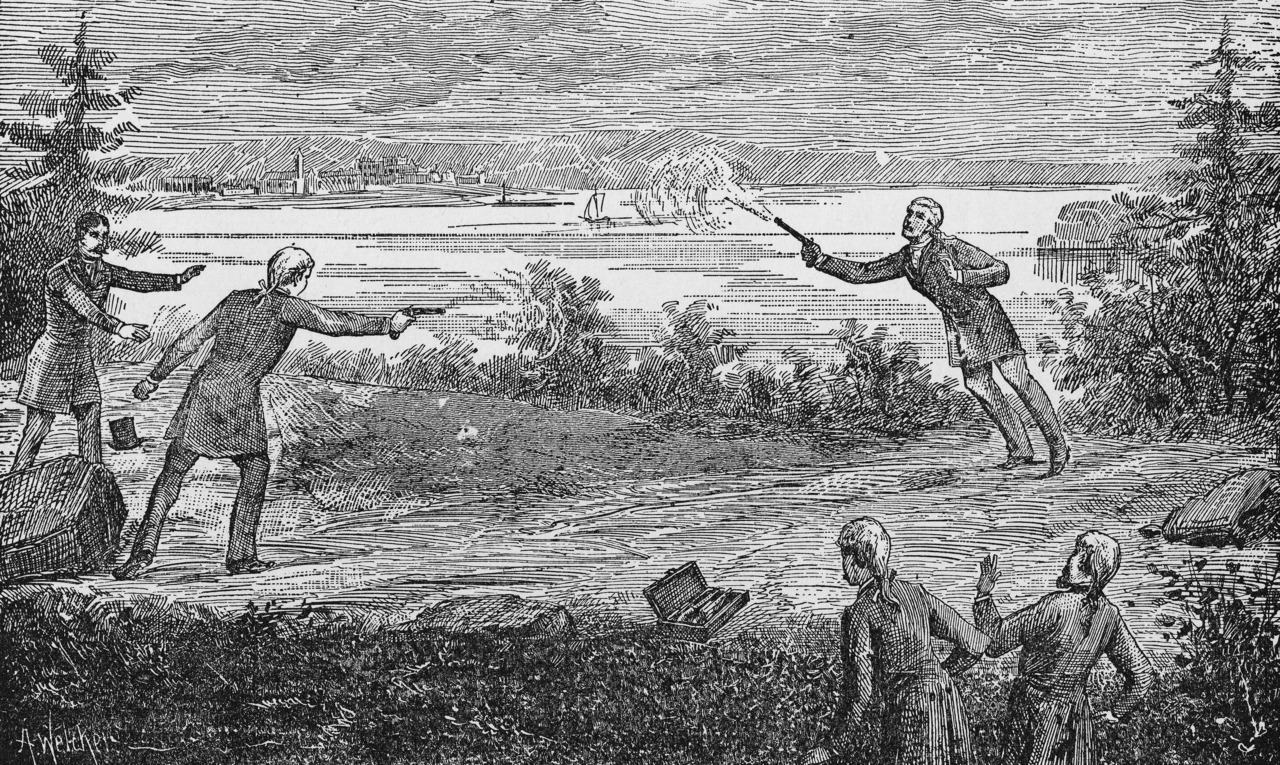
Gouverneur Morris: Alexander Hamilton's "best friend"; and the dramatic scene at Hamilton's deathbed, July 11, 1804.

For a discussion of Morris and Hamilton, see this article by Richard Brookhiser, published in the New York Post on the 211th anniversary of Hamilton's death: 


NY Post Article July 10th 2015

Morris and the French Revolution


When people think of early American diplomats in France, they think of Benjamin Franklin and Thomas Jefferson. Franklin's adventures there were certainly fascinating and remarkable; but it is Gouverneur Morris's time in France that I think was far more extraordinary than Jefferson's time, and every bit as interesting as Franklin's.  It coincided with the beginning of the French Revolution, and Morris was there right through the most violent upheavals, and knew nearly all of the principal players; and wrote about them in detail in his wonderful diaries.  What follows is taken from a talk I've given a few times about Morris's time in France.

 He went to France on business in 1789, and quickly became involved in French affairs, both romantic and political.  He had a long affair with an exceptional woman named Adélaide de Flahaut, married to a man 30 years older than she, and she had followed in a French tradition by becoming the mistress of another, the (later famous) Talleyrand.  Morris viewed French mores with interest,-- he wrote to a friend, "there are two types of men in France, husbands and those who make children for them." He himself tried to get Adele pregnant, but she never had more than one child, a son, who was a young boy when Morris first met her. 

He quickly became acquainted with the reformers, led by Lafayette who was fresh from the American Revolution and its republican principles.  Jefferson was still there as our minister plenipotentiary (we didn't call our diplomats ambassadors until much later)  and was giving Lafayette advice, helping him draft a Bill of Rights, and discussing the appropriate form of a new constitution.  Was this an appropriate activity for a minister from another country?  Regardless, he did it, and Morris would follow his example.  Lafayette asked Morris for advice as well, and so did some of the counselors and cabinet ministers of  Louis XVI.  Morris was not nearly as optimistic as Jefferson that the French could handle rapid reform and, unlike Jefferson, he quickly concluded that Lafayette was too ambitious and not wise enough to lead the country safely through a political metamorphosis. 

Morris thought things were moving too quickly, that the new  assembly was too undisciplined and ignorant to be able to design an effective government.  In the summer of 1789 he predicted that unless there was more restraint, and an effort made to reconcile the privileged aristocracy with the changes, they would turn on the new government and attack it, leading to anarchy and eventual despotism.  He was quite right, but few people wanted to hear this. 

Where the issue becomes more interesting and worthy of debate was when Morris was appointed minister in 1792, because he didn’t stop giving advice to the King, who was by this time almost entirely without power.   He joined a small group of royal counselors who came up with one escape plan after another to try and get Louis out of Paris to a safer location from which to re-establish authority and issue a new constitution.    The American government never knew what he was up to –even diplomatic pouches were not secure by this time; and it took too many months to communicate with America.  He certainly was doing what he thought was right.   America owed a huge debt to France for the success of its own revolution, and Morris believed that the only hope for France’s revolution lay with an enlightened constitutional monarchy.  Should diplomats do things like this?  It’s a very interesting question, and I don’t know the answer.    

It all failed, of course, and on August 10, 1792, the royal palace was attacked and the King’s personal guard slaughtered.    Louis and his family took refuge in the Assembly; from there they went to prison and eventually, execution.  One of Morris’s co-conspirators was beaten to death in the street; two others were seized, and one died on the guillotine and the other in the September massacres.  The rest fled the country. 

These events threw all the game pieces on the floor, and left Morris with a very difficult question:  what tack to take with the new revolutionary government?  There were many immediate issues: should he make a payment on the American Revolutionary War debt to France, payment which had been arranged for just days before the king fell?  Did his credentials, which were to the court of France,still apply?  Were the treaties of 1778 between America and France still in effect?  Would the United States recognize the new government?

If you know about all the complaints that were made about Morris, and the objections to his appointment as minister, you might assume he  demanded his passports and left.  But in fact  Morris was the only minister-level diplomat to remain in Paris after the fall of the King.  He wrote to Jefferson:

 Going hence however would look like taking Part against the late Revolution and I am not only unauthoriz’d in this Respect but I am bound to suppose that if the great Majority of the Nation adhere to the new Form the United States will approve thereof because in the first Place we have no Right to prescribe to this Country the Government they shall adopt and next because the Basis of our own Constitution is the indefeasible Right of the People to establish it.

The issues facing Morris were of great concern to the U.S.  France was already at war with Europe and it was clear that it would soon be at war with England.  The U.S. was very worried that honoring its treaty with France would require going to war on France’s behalf.  Morris recommended to Jefferson, however, that the U.S. recognize the new government and honor its commitments, and Jefferson agreed.

Morris’s recommendations relate to another charge against him: that his reports to America were unfair and inaccurate.   This was a concern about Morris through all the different changes of power, from Lafayette to Robespierre.   Since Morris’s predictions about France were mostly right it’s hard to agree they were distorted.  Morris’s reports make remarkable reading;  I only have time to read you one excerpt I particularly admire.  Morris wrote this to Thomas Pinckney, the American minister to London, in December 1792, while the King was being tried for treason.  The war in Europe had swung in France’s direction, temporarily.  Here’s what he said:  it's one of my favorite quotes:

Success as you will see, continues to crown the French Arms, but it is not our Trade to judge from Success . . . . You will soon learn that the Patriots hitherto adored were but little worthy of the Incense they received.  The Enemies of those who now reign treat them as they did their Predecessors and as their Successors will be treated.  Since I have been in this Country, I have seen the Worship of many Idols and but little [illegible] of the true God.  I have seen many of those Idols broken, and some of them beaten to Dust.  I have seen the late Constitution in one short Year admired as a stupendous Monument of human Wisdom and ridiculed as an egregious Production of Folly and Vice.  I wish much, very much, the Happiness of this inconstant People.  I love them.  I feel grateful for their Efforts in our Cause and I consider the Establishment of a good Constitution here as the principal Means, under divine Providence, of extending the blessings of Freedom to the many millions of my fellow Men who groan in Bondage on the Continent of Europe.  But I do not greatly indulge the flattering Illusions of Hope, because I do not yet perceive that Reformation of Morals without which Liberty is but an empty Sound.

The French government was worried not just because of what Morris might be saying about the political circumstances in France, but also what he was reporting as the war with Europe and the civil war in France began to affect Americans in France.  French privateers began seizing American ships and cargoes, in violation of the treaty with America.    Americans were thrown in jail -- the Law of Suspects meant anyone could be rrested, pretty much, and of course being a foreigner made you a suspect right away. 

   In early June 1793, the port city of Bordeaux rebelled against the Paris government.    In retaliation, the National Convention prohibited vessels from carrying cargoes out of the port.     By late November, there were 92 American ships trapped.   Morris protested repeatedly, and met with a deputation of captains from the ships, who also went directly to the National Convention. Morris warned them that even if they got a decree passed it wouldn’t last because of the dysfunctional state of the French government.  He was quite right, but that was not what the captains wanted to hear, and they apparently complained about him in letters to America and also to the French government.  But the embargo had nothing to do with the United States but with the civil war in France, and it  stayed in place until April 1794.  In the meantime, Morris made a rare admission of frustration to Jefferson:

     Every post brings me piles of letters about it from all quarters, and I see no remedy. . . ......if  I    would give way to the clamors of the injured parties, I ought to make demands very like a declaration of war.

 
He had heard nothing from his government for five months, and he would hear nothing until the summer of 1794, a gap of about nine months.   Although there were delays, naturally, the fact is that Jefferson wrote Morris rarely, and the worst gaps were about co-extensive with the Terror, when Morris’s need for support and input from his own government was critical.   As he wrote to Jefferson in the same letter, ;

    What am I to do in such cases?  It is impossible for me to guess the intentions of government, and indeed, sir, the responsibility is great and distressing.  Our countrymen here find, that it is the easiest thing in the world to carry any point with the Committees, until they have tried.  In the mean time, I am exposed to their clamors in this country, and most probably to their censures in my own, for not performing impossibilities.  In order to complete the business, nothing more is necessary, than that the rulers of this Republic, wearied with my complaints, should apply for my recall, in order to get rid of a troublesome fellow.  I think it is very likely to happen, if it be not already done.  I beg your pardon, Sir, for saying so much of myself, but it is a troublesome thing, to navigate in the dark between Scylla and  Charybdis.   

But, though he was operating in the dark, he consistently displayed moderation.  He was afraid that French depredations on American shipping might undermine America’s determination to be neutral, and that this would get America embroiled in the whole messy European war.   When the captains called for threats and retaliation, Morris refused, and his letters to the American government urged temperance. 

The papers at the American Philosophical Society contain the piles of letters that Morris described to Jefferson, and many of them were pleas for help from Americans in jail.  Here’s one typical example:  American William Hoskins  who wrote to Morris for help in December 1793.  He had arrived in an American ship at Calais, where he was arrested and taken to Paris.  He wrote: 


imagine to yourself my present situation, lodged in a chamber with two persons who are extremely sick of a fever & nothing to sleep on the last evening, without a farthing to purchase the necessaries of life, when this fact is told you I am persuaded the sympathy for a fellow countryman will excite your exertions as well as your pity. . . . do not delay for I am already sick ---- 

Morris repeatedly protested to the foreign minister, and after about a month, Hoskins was released.   


 Morris's  recall is a very interesting episode but I will only mention it here. A recall would seem to indicate disgrace; that Morris had failed his government.  Morris was distressed by it, for he felt that as long as his behavior had been “proper in regard to the United States,”  the Americans shouldn’t have agreed to recall him.  If the French had known they couldn’t get rid of him, they would have been far more cooperative.  He was replaced by James Monroe, who arrived in Paris two days after Robespierre had been executed.

The ostensible reason for Morris’s recall was a quid pro quo for the recall of Edmund Genet, the French minister to America. But there was a lot more to it than this.  Morris had enemies, who claimed to oppose him on political grounds but had very different motives.  The first time the French considered requesting his recall was when the first revolutionary ministry was hoping to cash in on a venture to conquer Spanish territories, and share the spoils; Morris was considered an obstacle.  The group included such unlikely Americans as Thomas Paine and William Stephens Smith, who was John Adams’s son-in-law, as well as Francisco de Miranda, the famous Venezuelan general.  They circulated pamphlets against Morris, and Smith told  Washington and Jefferson that Morris had alienated the French ministry and wanted to be recalled. 

There were several others who sent damaging reports about Morris, but the one that probably did the final trick was a letter to the Committee of Public Safety from an odd fellow named John Cusack , an American mercenary in the French army.  Cusack told Robespierre that Washington had named Morris, a man “gangrened” by the aristocracy to destroy French-American friendship.  The letter is right next to the request for Morris’s recall in the French archives.   In a bit of irony that is very typical of the French Revolution, two months after Cusack wrote it,  he was in jail in Paris, and asking Morris to help him get out.

         I should also mention that the Committee was already very uneasy because of a situation in which a French woman staying at Morris’s house was arrested.  The authorities entered Morris’s house over his protest, violating the law of nations regarding his diplomatic status.  The Committee knew the violation had been significant, and were very worried that Morris would induce the United States to break diplomatic relations. 

It is important to understand that during the 32 months of Morris’s ministry, there were seven different heads of foreign affairs in France.  Four were condemned as traitors, three died on the guillotine, and one defected to the Austrians.   As Morris pointed out, “to stand well with all parties is impossible,”  especially since by standing “well” with the first government to which he was accredited, the monarchy, he was certain to be distrusted by every succeeding regime.     With this kept in mind, it is clear that he did an extraordinary job.  This was the judgment of Theodore Roosevelt:  “We have never had a foreign minister who deserved more honor than Morris.   In his whole attitude towards the revolution, Morris represents better than any other man the clear-headed, practical statesman, who is genuinely devoted to the cause of constitutional freedom.”